Connect RP Outcomes 2025
Real Impact.
Relational Change.
Our work is grounded in evidence and shaped by schools.

The 2025 - 2026 Restorative Us Programme brought educators together to develop and embed restorative practice across their schools. At the end of the programme, participants were invited to reflect on the impact of their RP journey — from relationships, behaviour and teaching and learning, to staff wellbeing, professional support and wider school culture.
The findings below provide an overview of their experiences and the impact of Restorative Us across participating schools.
Q1 – Impact on relationships with students
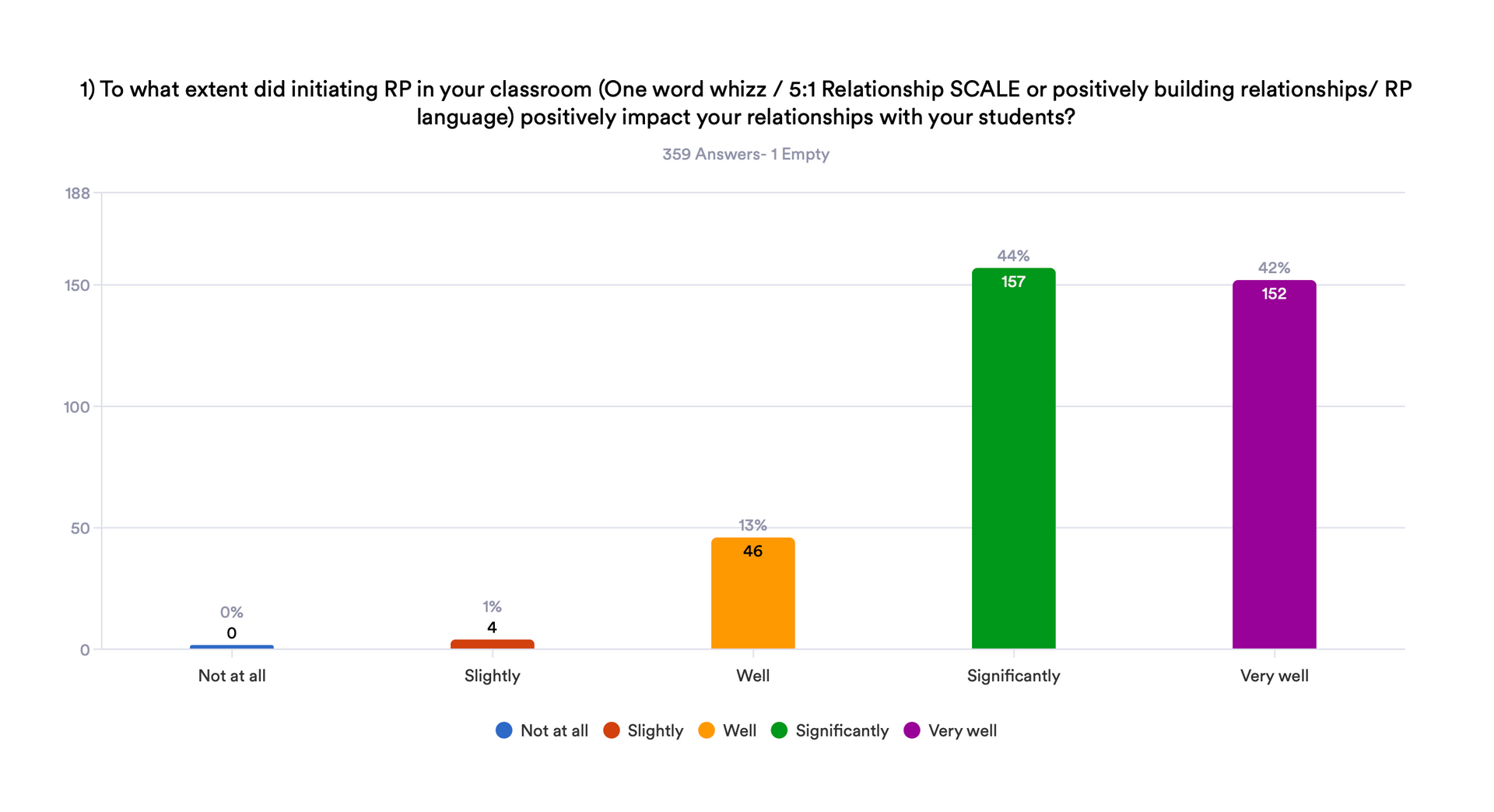
The findings demonstrate a very strong positive impact of initiating Restorative Practice (RP) on relationships between educators and students. Of the 359 respondents, 86% reported that RP had impacted their relationships either “significantly” (44%) or “very well” (42%), with a further 13% reporting a positive impact at the “well” level. Only 1% reported a slight impact and no respondents selected “not at all”. This provides strong evidence that relatively simple restorative and relationship-building approaches can make a meaningful difference to teacher–student relationships.
Q2 – Relationships with particularly challenging students/class groups
RP also appears to have had a substantial impact on relationships with students and class groups considered particularly challenging.
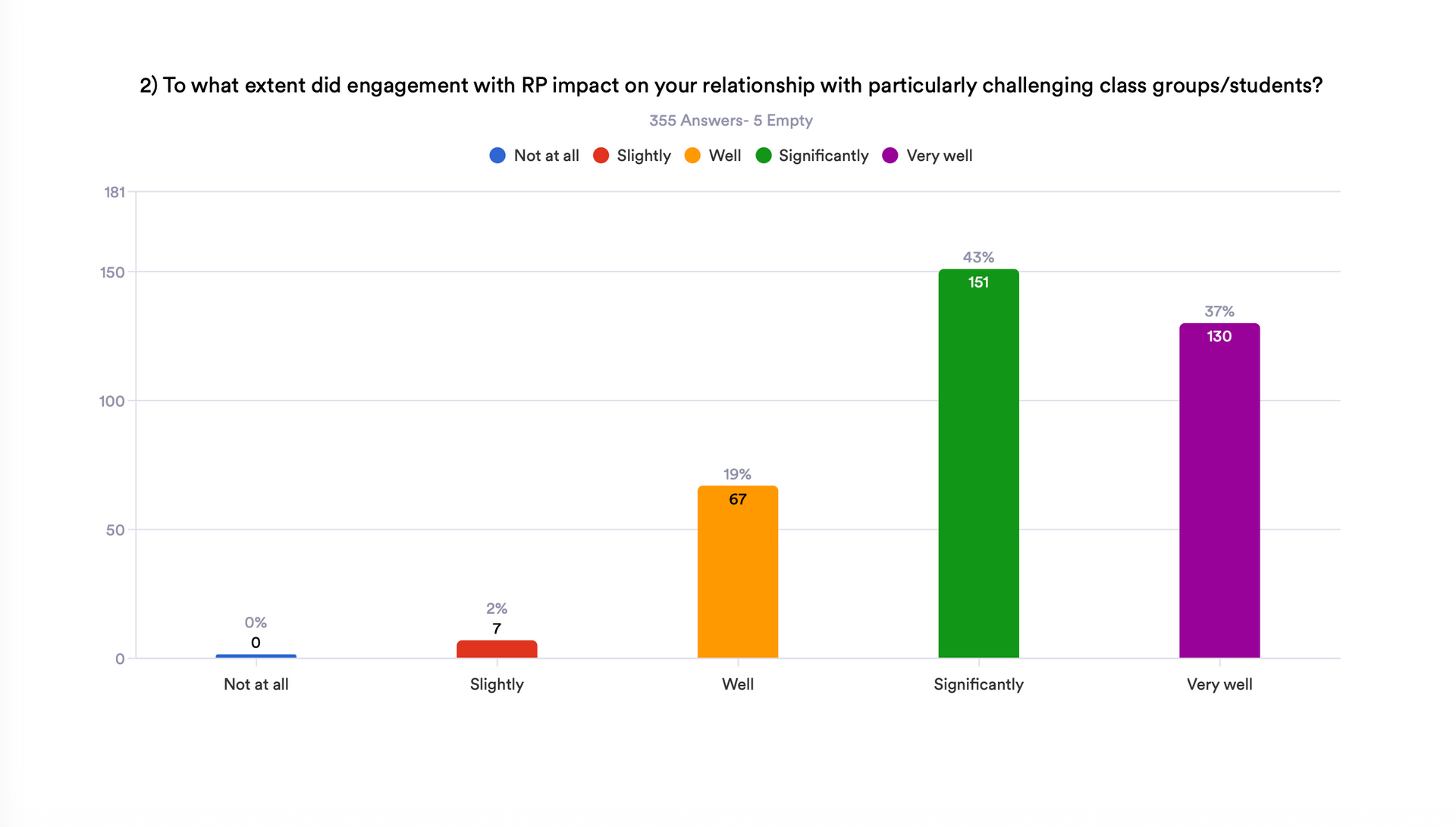
80% of respondents rated the impact as either “significantly” (43%) or “very well” (37%), while a further 19% selected “well”. Just 2% reported only a slight impact and none selected “not at all”. These results suggest that restorative approaches have particular value in supporting educators to build and strengthen relationships where challenges already exist.
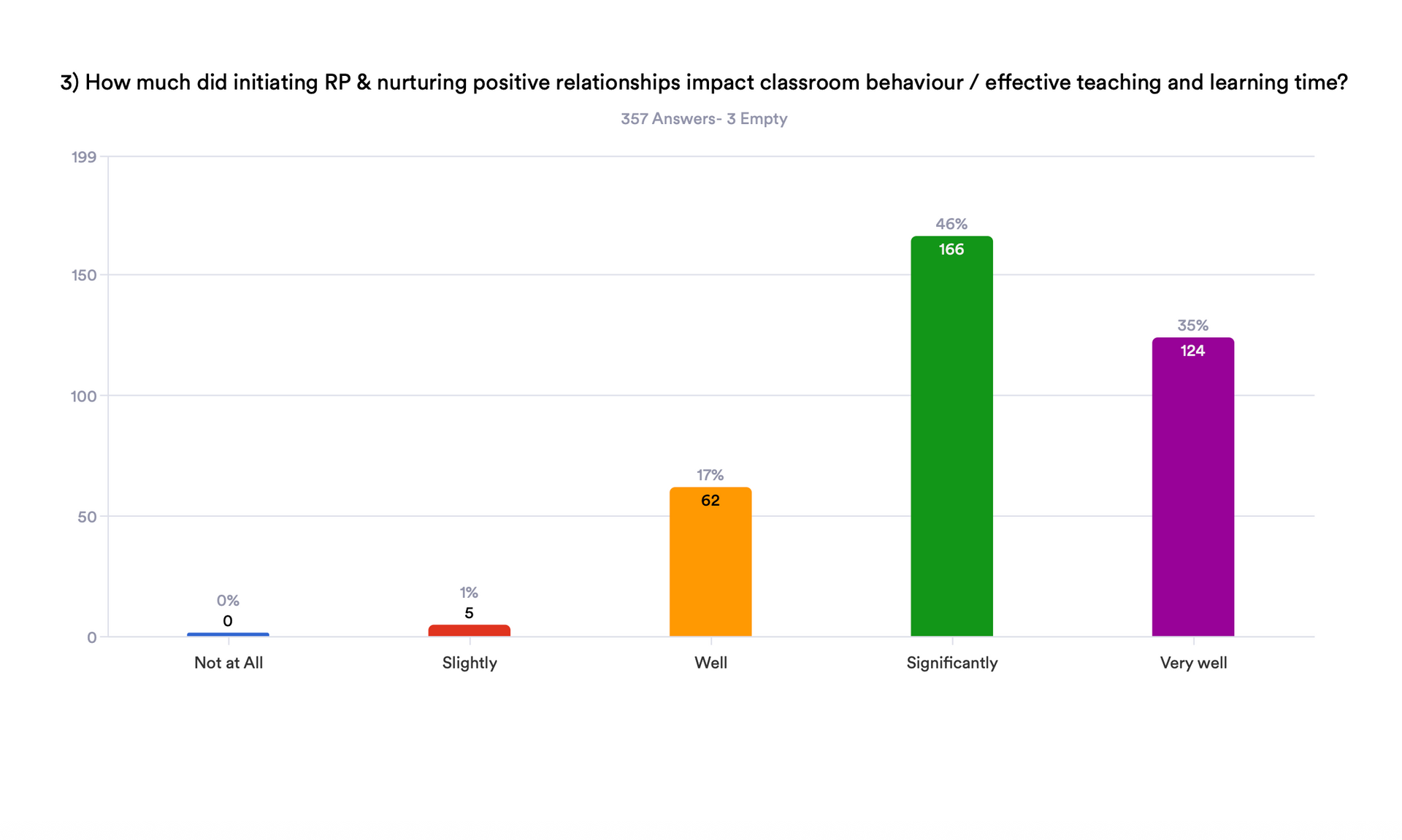
Q3 – Classroom behaviour and effective teaching and learning time
The results indicate that nurturing positive relationships through RP had a strong perceived impact on classroom behaviour and effective teaching and learning time. 81% of respondents rated the impact as “significantly” (46%) or “very well” (35%), with a further 17% selecting “well”. Only 1% reported a slight impact and none reported no impact. This suggests that the benefits of RP extend beyond relationships themselves, contributing to classroom environments that educators perceive as more conducive to effective teaching and learning.
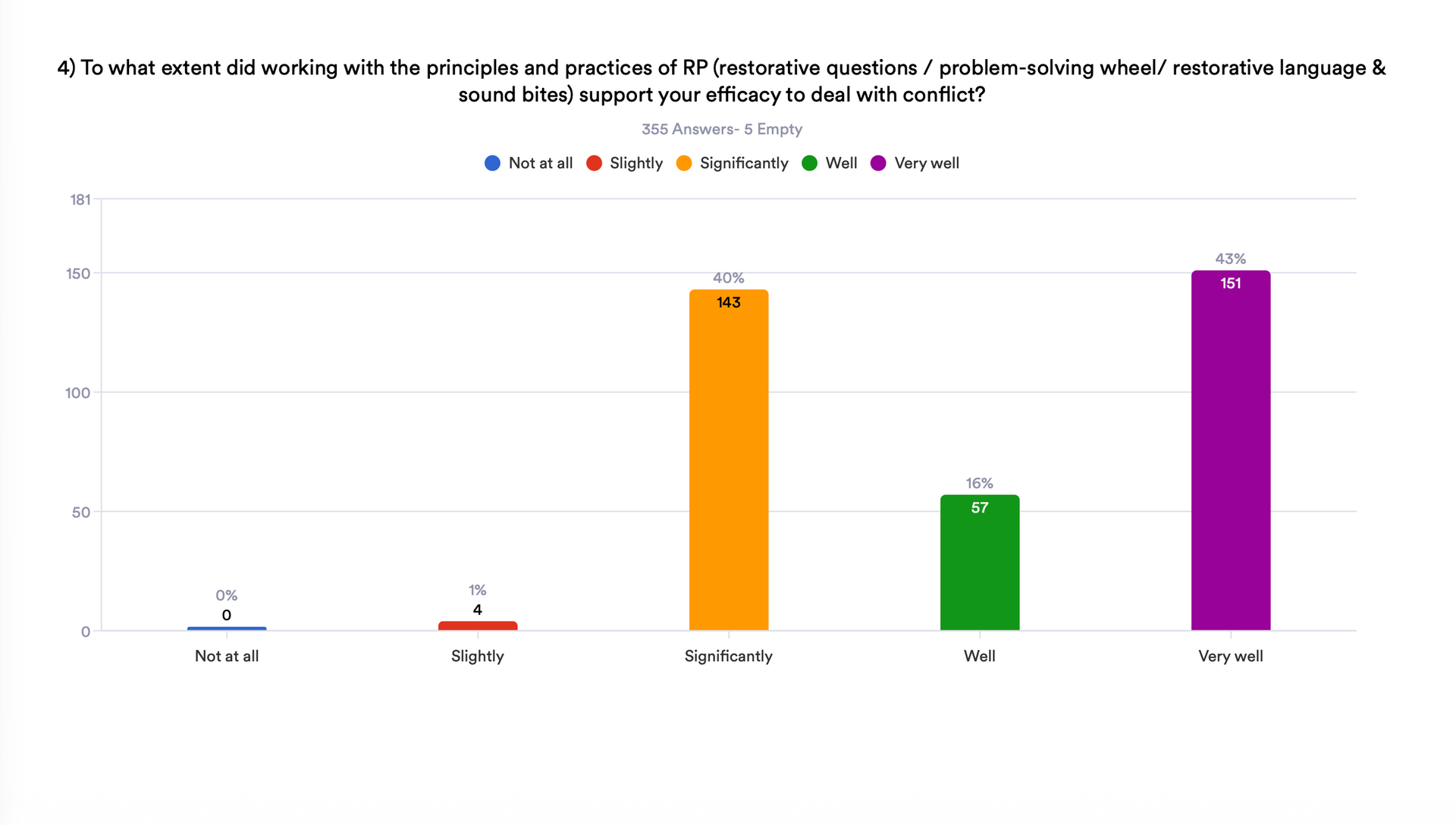
Q4 – Supporting educators to deal with conflict
Responses show that the principles and practices of RP provided considerable support to educators when dealing with conflict. 43% rated the impact “very well” and 40% “significantly”, meaning 83% of respondents selected these two high-impact categories. A further 16% selected “well”, while only 1% reported a slight impact and none selected “not at all”. The findings therefore indicate that restorative questions, restorative language, the problem-solving wheel and related approaches can provide educators with practical tools and increased capacity to navigate conflict.
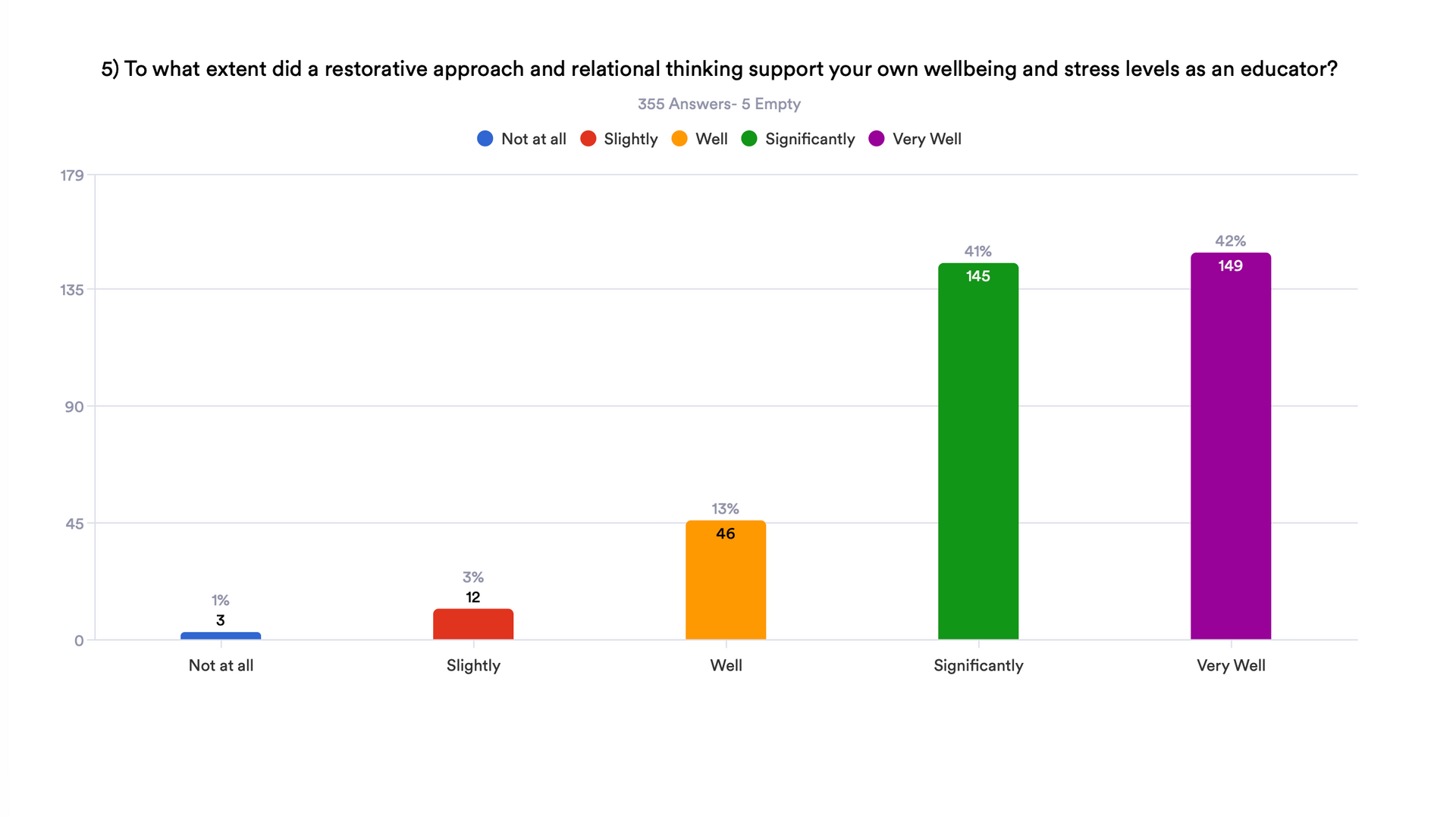
Q5 – Educator wellbeing and stress
The restorative approach was also perceived to have a positive impact on educators themselves. 83% of respondents reported that restorative and relational thinking supported their wellbeing and stress levels either “significantly” (41%) or “very well” (42%). A further 13% selected “well”, compared with just 3% “slightly” and 1% “not at all”. These findings highlight the potential for RP to support not only student outcomes and relationships but also staff wellbeing and educators’ experiences within school.
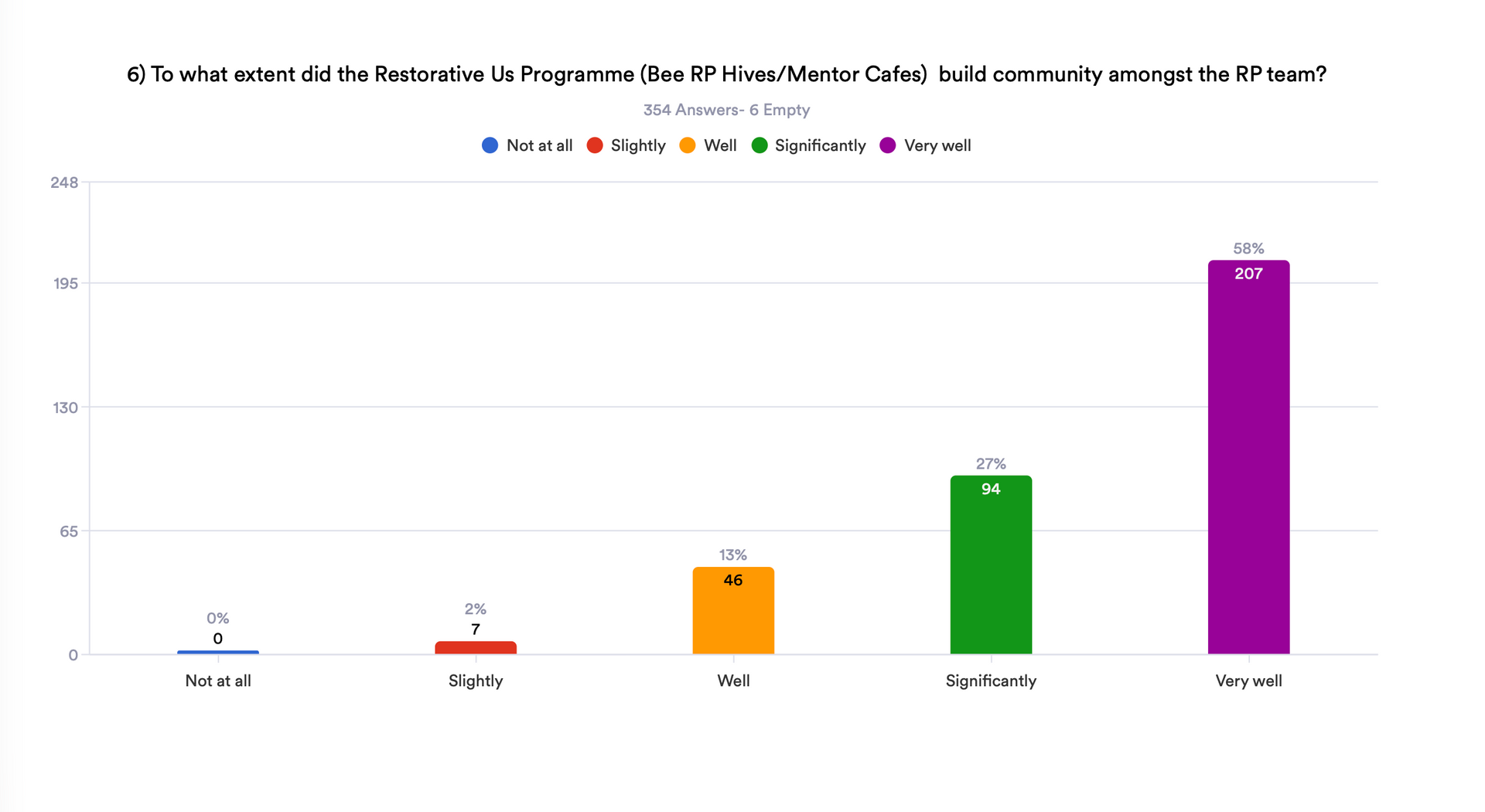
Q6 – Building community among the RP team
One of the strongest findings relates to the programme's role in building community among participating RP teams. 58% of respondents rated the impact of the Bee RP Hives/Mentor Cafes as “very well”, with a further 27% selecting “significantly”. Together, 85% therefore reported a particularly strong impact, while another 13% selected “well”. Only 2% reported a slight impact and none reported no impact. This suggests that the programme successfully created a strong sense of connection and community among those undertaking the RP journey.
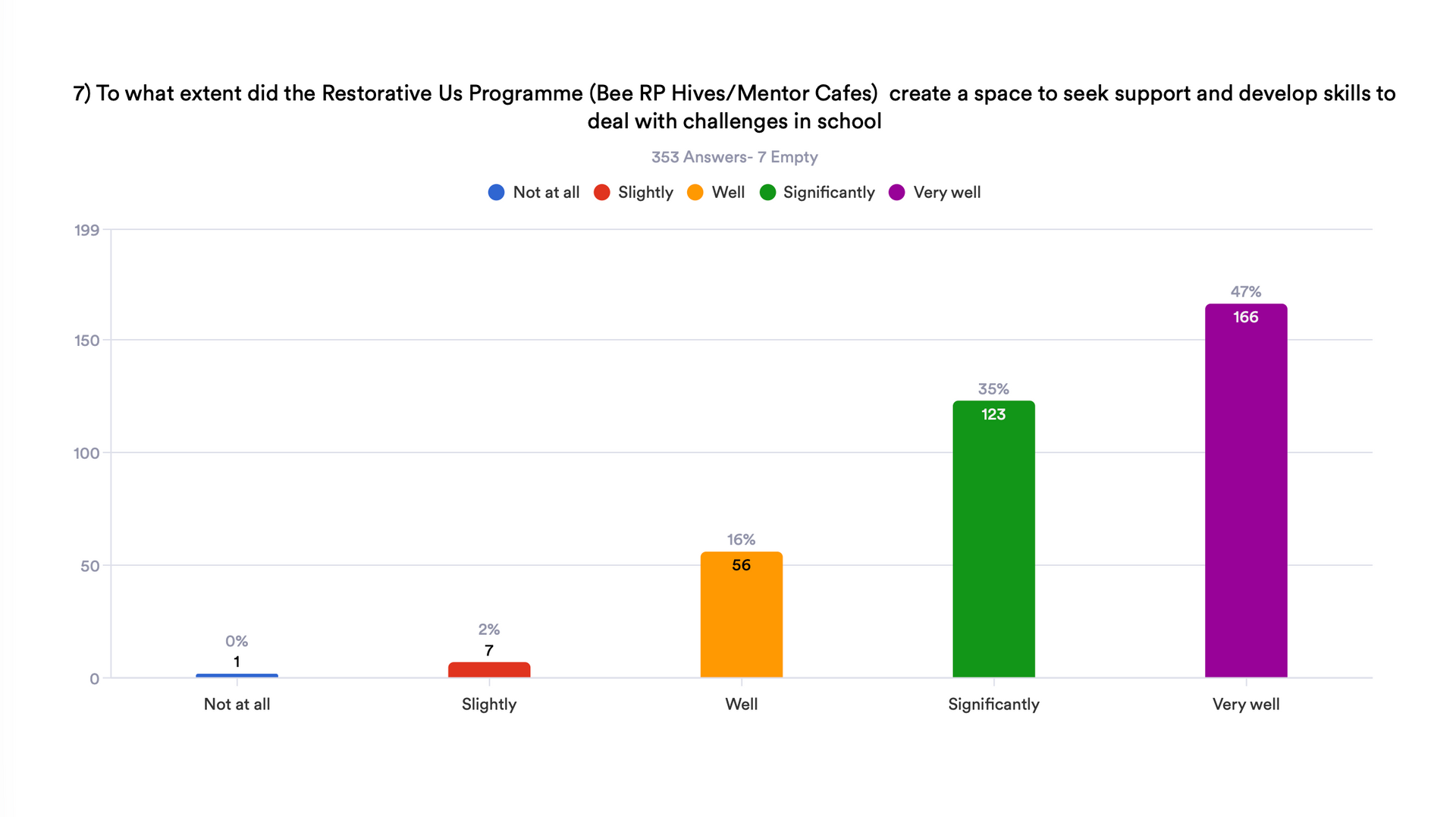
Q7 – Creating a space for support and skills development
The programme was also highly valued as a space where participants could seek support and develop skills for responding to challenges within school. 82% rated this aspect either “very well” (47%) or “significantly” (35%), with another 16% selecting “well”. Only 2% reported a slight impact and fewer than 1% selected “not at all”. This indicates that the Bee RP Hives/Mentor Cafes provided more than a professional learning opportunity; they also offered an important support structure through which educators could share challenges and strengthen their restorative practice.
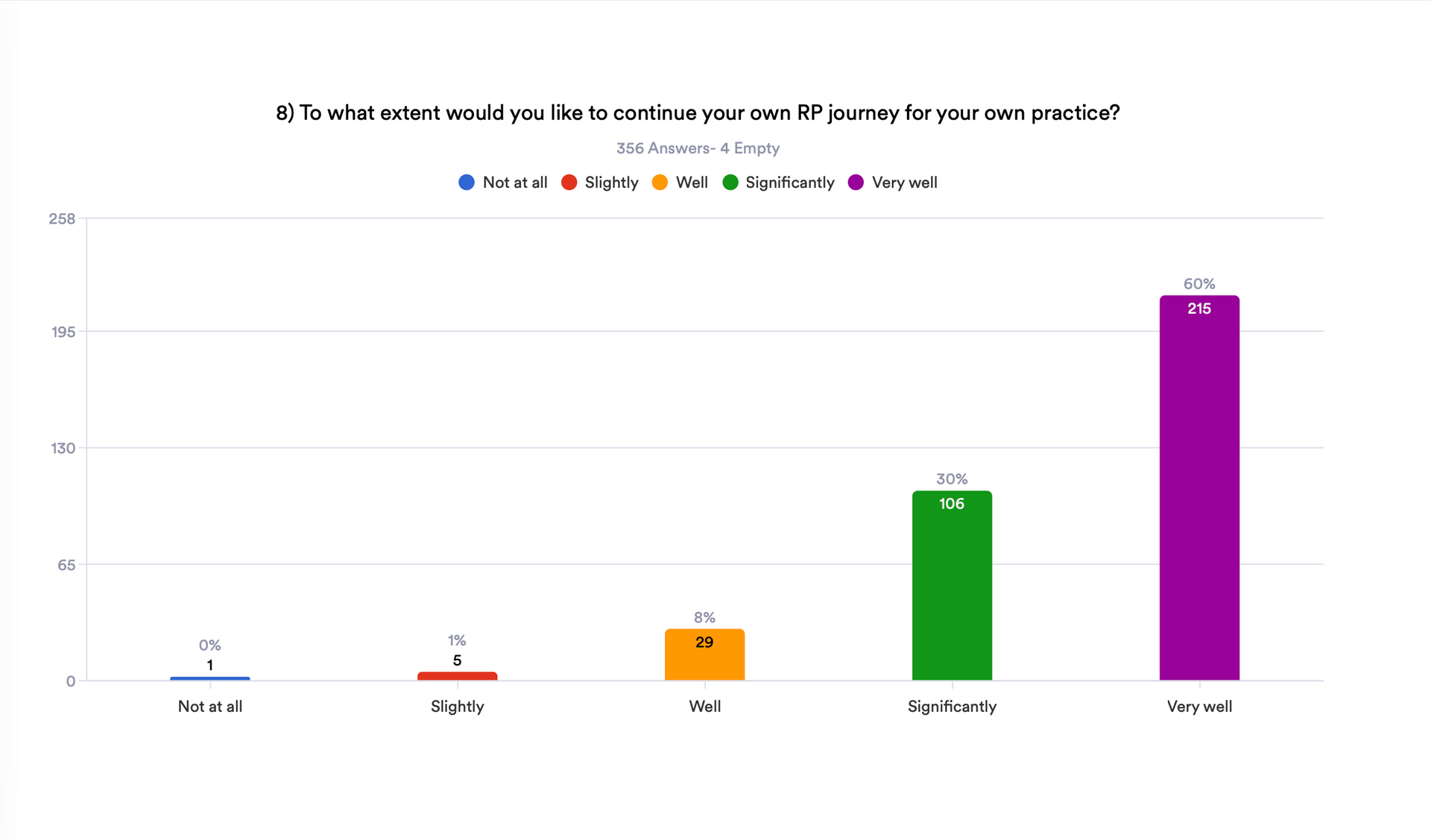
Q8 – Desire to continue the RP journey
There is a particularly strong appetite among respondents to continue developing their own restorative practice. 60% indicated “very well” and 30% “significantly” when asked to what extent they would like to continue their RP journey, giving a combined 90% in the two highest categories. A further 8% selected “well”, while only 1% selected “slightly” and fewer than 1% “not at all”. This is a significant endorsement of the programme and suggests that participation has generated strong motivation for sustained engagement with RP beyond the initial programme.
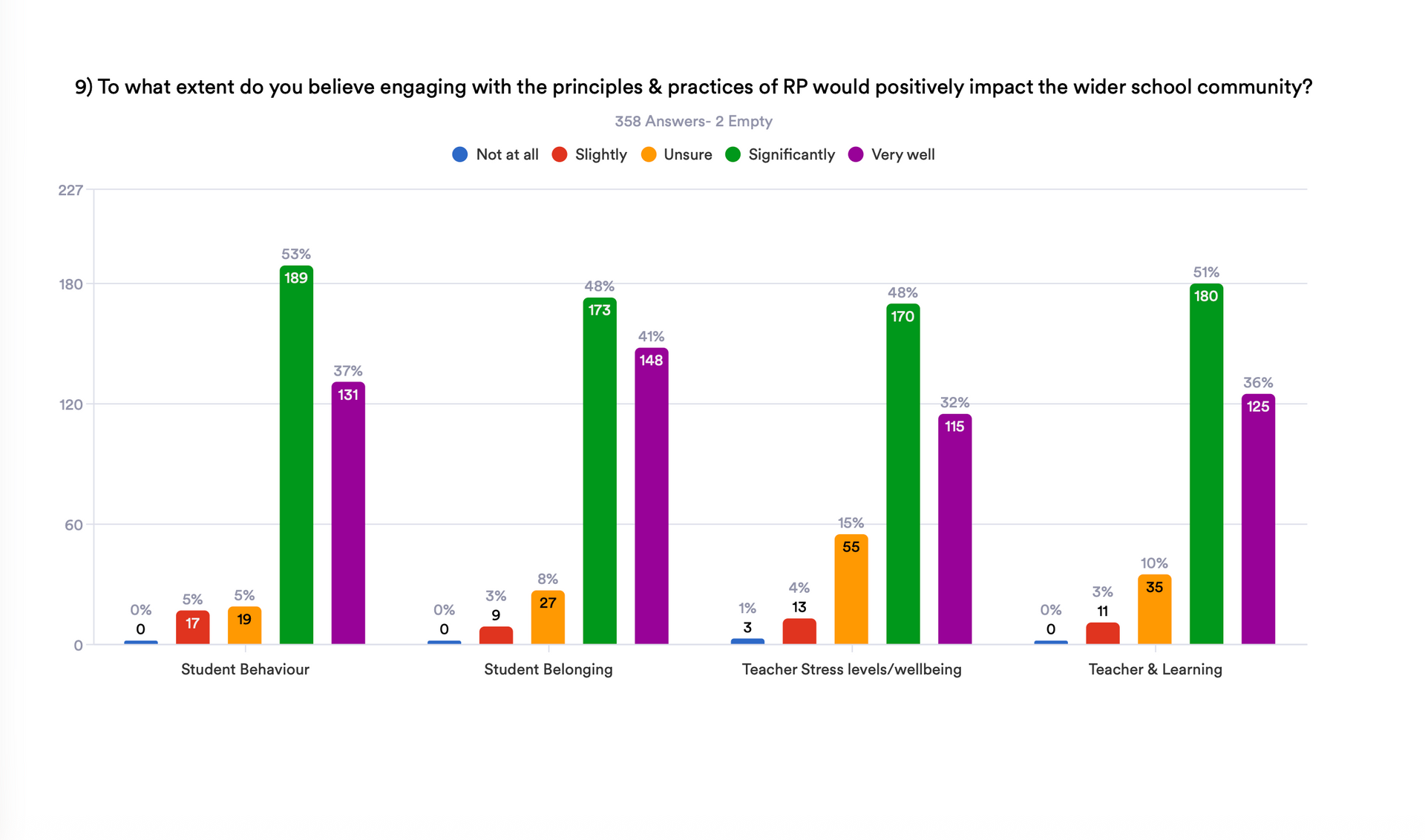
Q9 – Potential impact across the wider school community
Respondents expressed strong confidence in the potential for RP to positively influence the wider school community. The chart shows particularly positive perceptions across student behaviour, student belonging, teacher stress/wellbeing, and teaching and learning. For student behaviour, 53% selected “significantly” and 37% “very well”; for student belonging the figures were 48% and 41% respectively. Teacher stress/wellbeing received 48% “significantly” and 32% “very well”, while teaching and learning received 51% and 36%. Overall, the results suggest that participants see RP as having the potential to influence school culture across multiple interconnected areas, rather than being solely a behaviour-management approach.
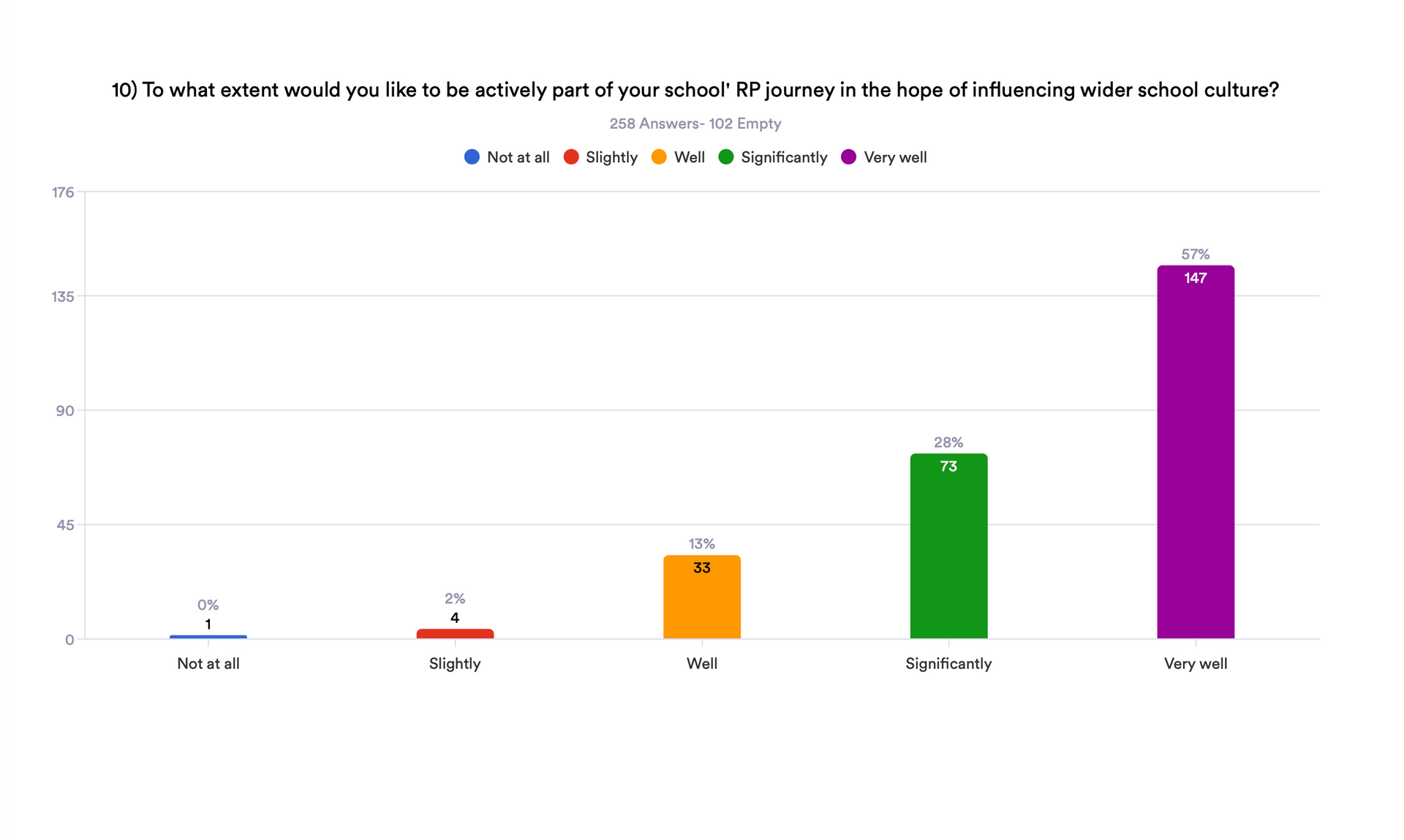
Q10 – Moving from Learning to Leading RP
Among the 258 respondents who answered this question, there was a strong desire to play an active role in influencing their school's wider restorative culture. 57% selected “very well” and 28% “significantly”, giving a combined 85% in the two highest categories. A further 13% selected “well”, while only 2% selected “slightly” and fewer than 1% “not at all”. This indicates a substantial level of commitment among respondents to move from individual restorative practice towards actively contributing to whole-school cultural change. It is worth noting that this question had 102 empty responses, considerably more than the other survey questions, so this result should be interpreted specifically in relation to those who responded.
Ready to take the next step?
Let's start a conversation about your school's journey.